Blog
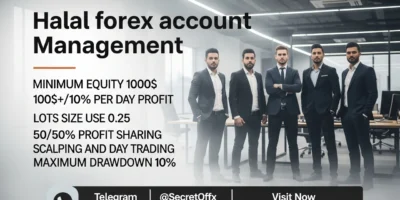
Forex Account Management and Profit Sharing

The Foreign Exchange (Forex) market operates 24 hours a day, five days a week, trading over $7.5 trillion daily. For many retail investors, the sheer liquidity, volatility, and complexity of this market are highly attractive, yet equally daunting. Navigating currency pairs requires deep technical expertise, psychological discipline, and continuous market monitoring—resources that many casual investors lack.
To bridge this gap, the financial industry developed Forex Account Management. This arrangement allows individual investors to delegate trading responsibilities to professional money managers or specialized trading firms. In return for generating returns, these managers charge a fee, typically structured around a profit-sharing mechanism.
Understanding how these managed accounts function, the legal frameworks governing them, the mathematical structures of profit-sharing models, and the inherent risks involved is essential for anyone looking to enter this space.
Contact Us | |
Telegram | |
Mail Us | |
Want to Join All Indicators VIP Access | |
Account Management More Details |

1. Understanding Managed Forex Accounts
A managed Forex account is a specialized trading account where an investor deposits capital, but a professional trader or fund manager executes the trades. Unlike traditional mutual funds, the investor retains full ownership of the account. The manager is granted trading privileges but is strictly prohibited from withdrawing or transferring the investor’s funds.
Account Structures: PAMM vs. MAM vs. LAMM
Managed accounts are executed using sophisticated broker-side software platforms. The three most common architectures are:
- PAMM (Percentage Allocation Management Module): In a PAMM setup, investor funds are pooled into a single master account managed by the trader. Profits and losses are distributed based on the percentage of capital each investor contributes to the total pool. For example, if an investor contributes 10% of the total pool, they receive 10% of the profits and absorb 10% of the losses.
- MAM (Multi-Account Manager): MAM accounts offer more flexibility than PAMM systems. The manager executes trades from a master console, but the trades are allocated to individual investor sub-accounts. This allows the manager to apply varying degrees of leverage, risk parameters, and trade sizes based on the specific risk tolerance of different investors.
- LAMM (Lot Allocation Management Module): A more rudimentary system where the manager’s trade sizes are replicated in the investor’s account based on fixed lot sizes rather than capital percentages. This is less common today, having been largely superseded by the precision of PAMM and MAM structures.
2. The Logic and Mechanics of Profit Sharing
The primary incentive for a professional trader to manage third-party capital is the performance fee, commonly referred to as profit sharing. Rather than charging flat administrative fees or traditional broker commissions, professional managers align their financial interests with those of the investor by taking a percentage of the net profits generated.
Standard Profit-Sharing Ratios
Profit-sharing ratios vary significantly based on the manager’s track record, the volume of capital under management (AUM), and the risk profile of the strategy.
| Account Tier | Capital Range | Typical Manager Share | Typical Investor Share |
| Retail / Micro | $5,000 – $25,000 | 40% – 50% | 50% – 60% |
| Standard | $25,000 – $100,000 | 30% – 40% | 60% – 70% |
| Institutional / VIP | $100,000+ | 15% – 25% | 75% – 85% |
Higher capital allocations generally give investors stronger leverage to negotiate lower performance fees.
The High-Water Mark (HWM) Principle
To protect investors from paying performance fees on volatile, recovering capital, reputable account management services utilize the High-Water Mark (HWM) principle.
The High-Water Mark ensures that a manager only receives a profit-share payout when the account value exceeds its historical peak value. If the account experiences a drawdown (a loss), the manager must trade the account back up to its previous peak before they can earn any further performance fees.
Mathematical Example of HWM and Profit Sharing
Let us assume an investor opens an account with an initial capital of $100,000 under a 30% profit-sharing agreement, with payouts calculated at the end of each month.
- Month 1 (Profit): The manager performs well, and the account grows to $110,000.
- Net Profit: $10,000.
- Manager Share (30%): $3,000.
- Investor Share (70%): $7,000.
- Ending Account Balance: $107,000.
- New High-Water Mark: $107,000.
- Month 2 (Loss): The market shifts, and the account falls to $95,000.
- Net Profit: $0 (No performance fee paid).
- Ending Account Balance: $95,000.
- High-Water Mark remains at: $107,000.
- Month 3 (Recovery): The manager recovers from the drawdown, bringing the account up to $105,000.
- Current Balance: $105,000.
- High-Water Mark: $107,000.
- Performance Fee: $0. Even though the account gained $10,000 this month ($95,000 to $105,000), it has not surpassed the previous High-Water Mark of $107,000.
- Month 4 (Growth): The manager continues the upward trend, bringing the account to $115,000.
- Eligible Profit for Fee Calculation: Current Balance ($115,000) minus High-Water Mark ($107,000) = $8,000.
- Manager Share (30%): $2,400.
- Investor Share (70%): $5,600.
- Ending Account Balance: $112,600.
- New High-Water Mark: $112,600.
3. The Power of Attorney: Limited LPOA Agreements
A frequent point of confusion for new investors is how a manager gains access to trade their money without compromising fund security. This is resolved via a legal instrument known as a Limited Power of Attorney (LPOA).
When enrolling in a PAMM or MAM program, the investor signs an LPOA contract provided by the brokerage. This document formally outlines the responsibilities and boundaries of both parties:
- Granted Powers: The manager is authorized to execute trades, manage open positions, utilize leverage, and employ specific risk mitigation tools (like stop-loss orders) using the investor’s balance.
- Restricted Powers: The manager cannot access the investor’s personal details, modify account security settings, or initiate external capital transfers.
The broker acts as a neutral clearinghouse. At the end of the specified billing cycle (weekly, bi-weekly, or monthly), the broker’s automated platform calculates the net profits, enforces the high-water mark, automatically debits the manager’s profit share, and deposits it into the manager’s wallet, while leaving the remainder in the investor’s account.
4. Risk Mitigation and Portfolio Safeguards
While the prospect of passive income through expert trading is appealing, the Forex market is highly speculative. Effective account management arrangements require strict risk mitigation parameters written directly into the management agreement or configured via broker software.
Drawdown Thresholds and “Equity Stop”
A critical safeguard for any managed account is a predetermined maximum drawdown limit. An equity stop is an automated trigger set at the brokerage level. If the account’s equity falls below a specific threshold (e.g., 20% or 30% of the starting capital), all open positions are instantly liquidated, the manager’s trading privileges are revoked, and the remaining capital is locked to prevent catastrophic loss.
Leverage Constraints
Forex brokers often offer extreme leverage, sometimes exceeding 1:500. While high leverage can compound profits, it equally amplifies losses. A robust management agreement explicitly limits the maximum leverage the manager can employ, ensuring they do not over-leverage the account during a streak of poor market performance.
5. Regulatory and Legal Compliance
The legality and oversight of Forex account management vary widely across global jurisdictions. Because managing third-party money falls under the umbrella of asset management, regulatory bodies enforce strict compliance laws to protect retail consumers from fraud.
- United States: In the US, individuals managing Forex accounts for others must be registered as a Commodity Trading Advisor (CTA) or an Associated Person (AP) with the Commodity Futures Trading Commission (CFTC) and maintain membership with the National Futures Association (NFA).
- United Kingdom: The Financial Conduct Authority (FCA) mandates that anyone managing funds or offering investment advice must hold specific regulatory permissions and comply with rigorous capital adequacy and reporting standards.
- Offshore Jurisdictions: Many management programs operate via brokers registered in offshore jurisdictions (such as St. Vincent and the Grenadines, Seychelles, or Vanuatu). While these regions offer lower operational hurdles and higher leverage options, they provide significantly less regulatory recourse for investors if a dispute or fraudulent activity occurs.
6. Evaluating and Selecting a Forex Account Manager
Due to the decentralized nature of the Forex market, misleading marketing and inflated performance claims are common. Investors must conduct thorough due diligence before assigning their capital to a manager.
Look for Verified Track Records
Never rely on screenshots, Excel spreadsheets, or unverified trading statements provided directly by a manager. Demand a track record verified by independent, third-party analytics platforms such as Myfxbook or FX Blue. These platforms link directly to the broker’s read-only investor API, ensuring that the historical returns, drawdowns, win rates, and profit factors are authentic and unmanipulated.
Key Performance Metrics to Analyze
When evaluating a manager’s history, look beyond the raw monthly return percentage and focus on these critical risk-adjusted metrics:
- Maximum Historical Drawdown: The largest peak-to-trough decline in the account balance. A manager making 10% monthly returns with a 15% drawdown is far safer than a manager making 15% monthly returns with an 80% drawdown.
- Profit Factor: Calculated by dividing total gross profits by total gross losses. A profit factor above $1.5$ indicates a strong, sustainable strategy.
- Average Trade Duration: Indicates whether the manager is scalping volatile moves (holding for seconds to minutes) or swing trading macroeconomic trends (holding for days), which dictates how the account will react during sudden news events.

Contact Us | |
Telegram | |
Mail Us | |
Want to Join All Indicators VIP Access | |
Account Management More Details |
7. Conclusion: Balancing Risk and Reward
Forex account management with a profit-sharing structure offers a compelling win-win scenario for both participants. It grants investors access to institutional-grade trading strategies and complex financial markets without requiring years of study or screen time. Concurrently, it empowers skilled traders to scale their income by monetizing their expertise across a broader pool of capital without taking on personal debt.
However, success in this domain requires a clear understanding of the operational mechanics—from PAMM architectures to High-Water Mark protections. By pairing with a transparent manager who features verified historical data, establishing firm equity stops, and utilizing regulated brokerages, investors can effectively balance the high-risk nature of foreign exchange with structured, professional risk management.